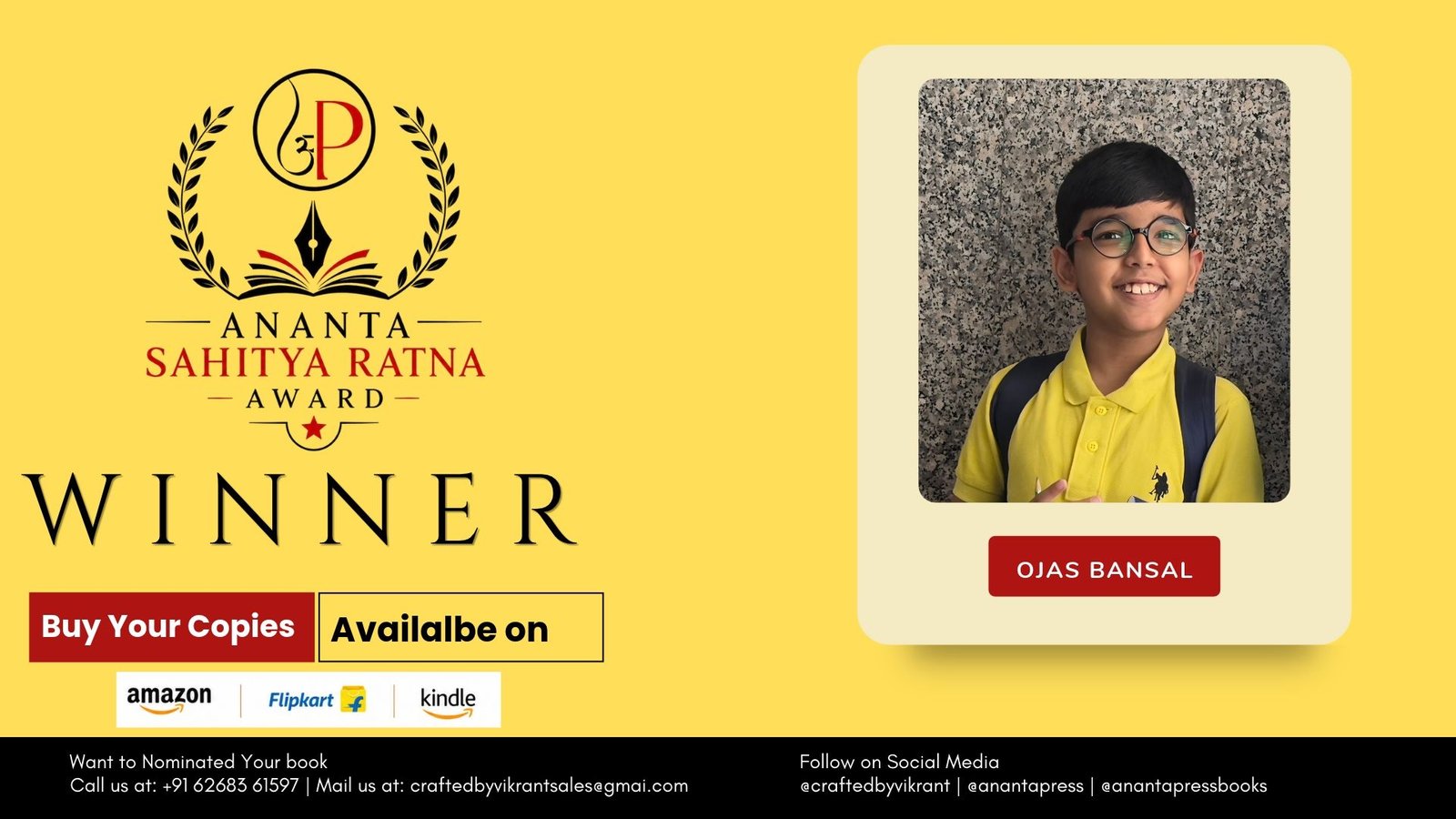
Congratulations to Ojas Bansal on winning the Ananta Press Sahitya Ratna Award for Ojas Alphabet Tales. This 34-page illustrated book uses alphabet stories, cheerful characters, vocabulary challenges and quizzes to encourage early learning. The award celebrates writing that offers imagination and value to readers. Its thoughtful mix of education and positive values explains this selection.
Glenville Ashby
Ojas Alphabet Tales presents a fresh way to introduce children to letters. An alphabet book can easily become a series of things to remember, but this concept makes each letter the beginning of an adventure. Stories give children a reason to pay attention, while cheerful characters help them feel welcome. This matters because reading begins with interest, not only with correct answers. The fantasy elements also make room for children to imagine places, people and possibilities beyond their daily routine. Curiosity is valuable in a book for young readers because it encourages them to ask questions and discover words. The decision to include vocabulary challenges and quizzes gives the storytelling a second purpose. Children can enjoy the tales and then practise what they have learned. This balance between enjoyment and learning is its strongest promise. It makes the nomination meaningful and shows why imaginative children’s writing deserves recognition in literature.
Kavya Pandey
One of the appealing qualities of Ojas Alphabet Tales is that it treats young readers as active participants. They are not expected to look at a letter and repeat its sound. The stories invite them to follow characters, discover words and answer questions along the way. This style can make learning less stressful and more enjoyable, especially for children who are beginning to read independently. The quizzes also create moments for a parent or teacher to join the experience. A simple question after a story can start a conversation about what a child noticed or understood. Another strength is the cheerful tone. A friendly atmosphere encourages children to try again when they do not know an answer. In this way, the book links literacy with confidence. Its educational purpose does not replace creativity. Instead, the two work together. That combination gives the book a place among engaging early learning titles.
Apeksha Gupta
The positive values in Ojas Alphabet Tales are important to its appeal. Curiosity, courage, kindness, friendship and family are ideas that children can recognise in their lives. Including these themes alongside letters and vocabulary means that the learning experience can reach beyond the classroom. A child may remember a new word, but may also begin thinking about how to help a friend or show courage in a difficult moment. This is a useful goal for children’s literature. The stories do not need complicated language to communicate meaningful ideas. In fact, a simple approach can make such ideas easier to discuss at home. Families can use the book to ask children what kindness looks like or why friendship matters. The combination of imagination and gentle values gives the book a warm identity. It supports the award’s celebration of writing that aims to make a positive difference to its readers, younger ones.
Kavita Kaushik
Illustrations can play an important role when a child begins to connect pictures, letters and stories. In Ojas Alphabet Tales, the illustrated approach and cheerful characters are well suited to that stage of reading. Colourful scenes can invite a child to open the book, while encounters with letters can help build familiarity. The compact 34-page format may make the experience approachable for young children and for adults reading with them. What is attractive about the concept is the variety of activities. Children can move from a story to a vocabulary challenge and then to a quiz without leaving the world of the book. That change of pace can keep attention focused while encouraging recall. The fantasy setting adds a sense of play. This makes the learning journey feel like an exploration rather than a lesson. The book deserves appreciation for bringing visual storytelling and early learning together in a format.
Neel Preet
A children’s book can become valuable when it creates a shared activity for the family. Ojas Alphabet Tales offers that possibility through short imaginative stories and questions that adults and children can discuss together. A parent might read a letter story aloud, pause to talk about a character and then help a child complete a vocabulary challenge. A teacher could use the same pattern during a reading session. These interactions help children practise speaking, listening and remembering new words. They can also build a habit of enjoying books. The inclusion of themes such as family, friendship and kindness supports these conversations. Rather than focusing only on memorising the alphabet, the book encourages children to connect letters with experiences and feelings. That gives the concept a quality. Ojas Bansal’s approach shows how storytelling can support learning while bringing people together, which is a meaningful contribution to books written for young readers.
Deepak Seth
The most encouraging part of Ojas Alphabet Tales is its belief that imagination belongs in education. Fantasy can help a child see an ordinary letter as a doorway to a new story. That idea makes space for fun without losing the practical goal of building vocabulary. Ojas Bansal’s author biography also describes an interest in different cultures, new languages, drawing and colouring imagined worlds. These interests fit with a book built around words and pictures. They suggest a creative outlook that could continue to grow with future writing. The themes of courage and curiosity are fitting because learning often involves trying unfamiliar things. This concept encourages that willingness in a gentle way. It also recognises kindness and friendship as part of a child’s development. By bringing together imaginative tales, learning activities and positive messages, the book offers a hopeful direction for children’s literature and a reason to celebrate its author.
Ananta Press congratulates Ojas Bansal and wishes him continued creativity, confidence and success in bringing meaningful stories to young readers.