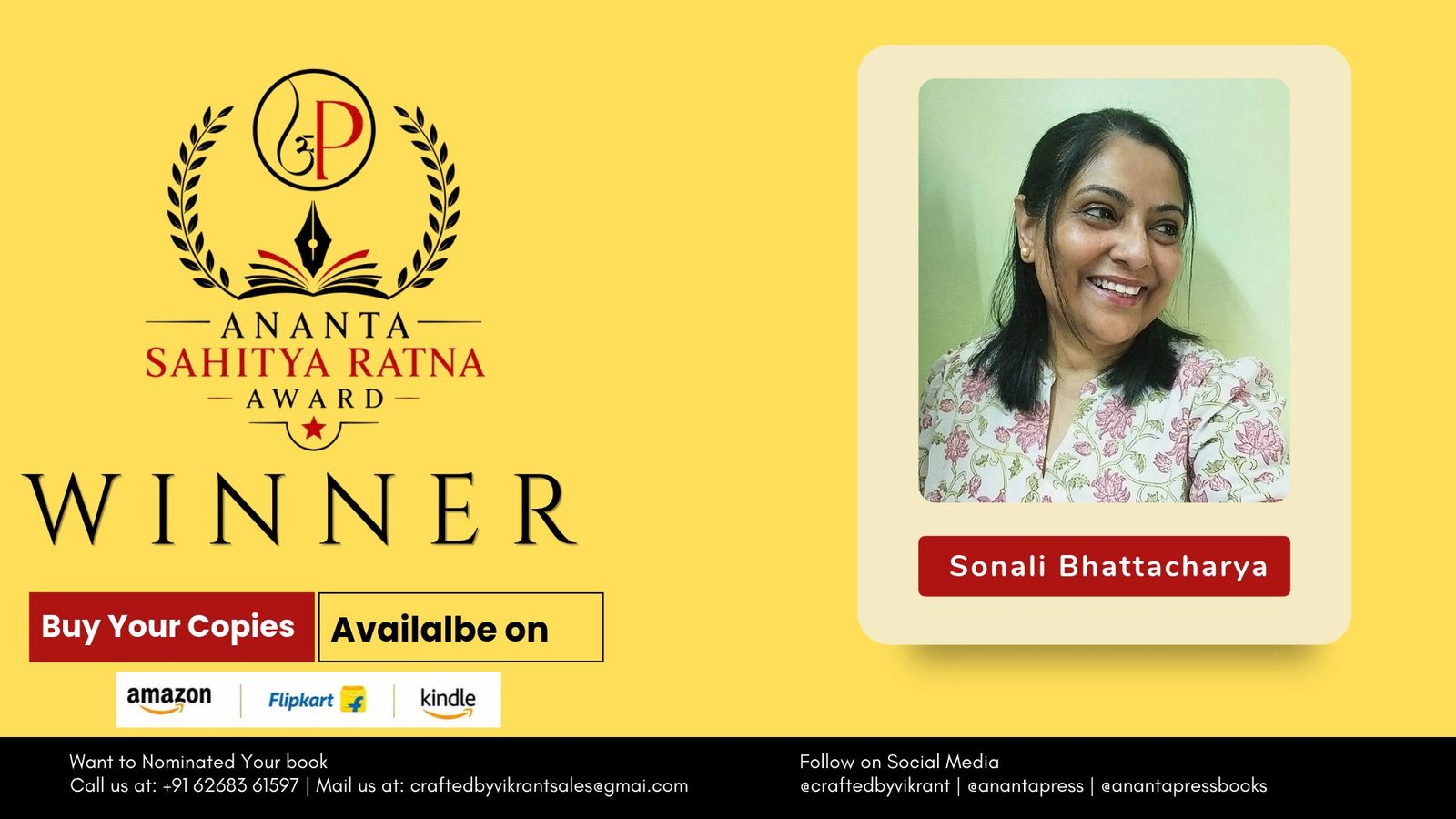
Ananta Press is pleased to congratulate Sonali Bhattacharya, whose short story collection Almost… Not Quite has been named a winner of the Ananta Press Sahitya Ratna Award. This recognition celebrates a work that finds meaning in the moments people often leave unspoken: the dreams they did not follow, the relationships that did not last, and the choices that might have changed their lives.
In a world where stories often move towards clear answers and dramatic endings, Almost… Not Quite offers a different way of looking at life. Its 24 short stories explore the quiet space between what people hope for and what they receive. There is sadness in this space, but there is also tenderness, growth, and a deep understanding of human nature.
At the heart of the collection is the Bengali expression “na pawa.” It describes the feeling of wanting something deeply and never quite receiving it. The idea may have its roots in Bengali language and culture, but the emotion reaches far beyond one region. Almost everyone carries a memory of something that could have happened. It may be a friendship that faded, a dream set aside, a home left behind, or a conversation that never took place.
Sonali Bhattacharya gives this emotion a literary home. Rather than treating every unfinished experience as a failure, the book asks readers to consider how these experiences shape them. What remains incomplete can still have value. What is lost can teach us something about love, hope, and the passage of time. The collection invites readers to see their own lives with a little more patience and kindness.
Kolkata and towns across West Bengal provide the setting for these stories. This regional grounding gives the book a clear cultural identity while allowing its themes to feel familiar to people everywhere. The places and emotional traditions of Bengal help frame the collection’s exploration of memory, belonging, and longing. The result is a work with a strong local character and a message that can cross geographical boundaries.
The author’s own journey adds another interesting dimension. A Kolkata-based writer and a graduate of Jadavpur University, Sonali Bhattacharya has spent nearly three decades in technology leadership and related professional roles. Alongside this career, she has continued to write about everyday people and the feelings that often escape notice. Her earlier works include Safety Pin and The Broken Bridge. In Almost… Not Quite, that attention to ordinary experience becomes the central strength of the collection.
The Ananta Press Sahitya Ratna Award aims to recognize writing that contributes meaningfully to literature and offers readers a lasting connection with ideas, stories, and emotions. In recognizing Almost… Not Quite, the award celebrates the value of fiction that does not depend on grand events to make an impression.
The subject is simple, yet the questions it raises are important. How do we live with wishes that remain unfulfilled? Can something incomplete still be beautiful? Do our disappointments sometimes help us understand ourselves better?
These questions help explain why the collection stands out for recognition. Its central idea is distinctive in the way it brings together 24 different stories around one shared human emotion. Its connection to Bengali culture gives it a distinct voice. Its treatment of missed possibilities encourages reflection rather than easy judgment. Most importantly, its message offers comfort without pretending that every loss has a happy ending.
The work also reminds us of the importance of short fiction. A short story does not need many pages to leave readers with a question or a memory. A collection can offer many windows into human life, each showing a different possibility. Through this form, Almost… Not Quite invites readers to move from one experience to another while considering what connects them all.
For readers who have ever wondered what might have been, the book offers recognition. For those who are learning to accept changes in their lives, it offers a gentler perspective. And for readers discovering stories rooted in Bengal, it offers a chance to connect with local feelings and universal truths at the same time.
The Ananta Press Sahitya Ratna Award is a celebration not only of an author’s achievement but also of the power of literature to help people understand one another. Sonali Bhattacharya’s work reminds us that the unfinished parts of life deserve to be told with care and dignity.
We warmly congratulate Sonali Bhattacharya on being named a winner of the Ananta Press Sahitya Ratna Award for Almost… Not Quite. We wish her continued success in her literary journey and look forward to the stories she will share in the years ahead. Her contribution to contemporary fiction is a reminder that even lives that turn out differently from our dreams can hold meaning, beauty, and hope.
Proposed Jury Feedback Drafts
- Glenville Ashby
What I find most appealing about the idea behind Almost… Not Quite is its respect for the parts of life that remain unfinished. Many books are built around a final victory, a major loss, or a clear answer. This collection takes a quieter path. Its 24 stories focus on possibilities that never became reality, yet they do not suggest that such experiences are without value. The theme of “na pawa” provides a thoughtful link between the stories and gives readers a simple way to understand a complex feeling. I also appreciate that the book is rooted in Kolkata and West Bengal while speaking about emotions that can be understood anywhere. The description suggests a collection that trusts readers to sit with questions rather than demand an easy ending. That is an important quality in literary fiction. My strongest impression is of a book that encourages empathy for ordinary lives and reminds us that an incomplete journey can still be meaningful.
- Kavya Pandey
The emotional idea at the centre of Almost… Not Quite feels familiar in a very personal way. Most people can remember a wish that remained unanswered or a moment they wish had happened differently. Sonali Bhattacharya brings these feelings together through the Bengali idea of “na pawa,” which gives the collection a clear sense of identity. I especially like that the book does not appear to treat every missed chance as a tragedy. Instead, it asks whether longing can also teach people patience, understanding, and acceptance. That makes the collection inviting for readers at different stages of life. The setting of Kolkata and smaller towns in West Bengal adds warmth and cultural character to the concept. I would expect readers to connect the themes with their own memories, even when their lives are very different from those suggested in the book. The central message is gentle but strong: not receiving everything we want does not mean our lives are empty.
- Apeksha Gupta
One of the most interesting strengths of Almost… Not Quite is the way it connects a regional expression with a universal experience. The words “na pawa” belong to Bengali culture, but the sense of something deeply wanted and never received is understood across languages. This gives the collection the potential to introduce readers to a particular cultural feeling without making them feel distant from it. The decision to explore the theme through 24 short stories also seems well suited to the subject. Different lives can show different forms of longing, and readers may find a separate point of connection in each story. I value fiction that leaves room for thought after the final page, and the idea of lives that almost happened offers that possibility. What stands out most to me is the refusal to label every incomplete relationship or dream as a failure. It is a compassionate message that could stay with readers long after they finish the collection.
- Kavita Kaushik
Almost… Not Quite stands out to me because it pays attention to feelings that people often hide behind their daily routines. Dreams change, relationships remain unresolved, and important words sometimes go unsaid. These experiences may seem small from the outside, but they can stay with someone for years. The collection places such moments at the centre of its storytelling. I appreciate this choice because stories do not always need dramatic events to matter. Sometimes the most powerful subject is an ordinary person trying to make peace with what did not happen. The Bengali setting also gives the book a sense of place, which can make its wider emotional message more engaging. I particularly like the question raised by the description: can an unfulfilled desire help us become who we are? It encourages readers to think about disappointment with greater care. This is the kind of thoughtful theme that can begin meaningful conversations among readers about memory, choices, and acceptance.
- Neel Preet
The title Almost… Not Quite immediately suggests a feeling that is difficult to explain but easy to recognize. There is hope in the word “almost” and quiet disappointment in the words “not quite.” Together, they capture the emotional world that this collection wants to explore. I find that a strong and memorable starting point for a book of short stories. The focus on 24 lives and missed possibilities suggests a range of human experiences held together by one clear idea. The use of “na pawa” is especially meaningful because it names a feeling many people have carried without finding the right words for it. I also welcome the book’s gentle approach to unfinished stories. Readers are not asked to believe that every dream will come true. They are invited to understand that life continues to offer meaning even when it takes another path. That balanced perspective gives the collection a hopeful quality without taking away its sadness.
- Deepak Seth
I admire the central question of Almost… Not Quite: what do our unfulfilled hopes contribute to the people we become? It is a question that reaches beyond fiction and enters everyday life. People often measure their journeys by achievements, completed plans, and successful relationships. This collection encourages another way of looking at experience. It gives importance to the opportunities missed, the dreams postponed, and the connections that did not fully develop. I think that is a relevant and humane theme for modern readers. The choice of short stories makes sense because the same emotion can appear in many different situations, and each account can encourage a new reflection. The setting in West Bengal adds a welcome cultural foundation to the work, while “na pawa” helps unite its larger message. The most valuable part of the book’s concept is its reminder that acceptance does not require forgetting. Our unfinished experiences can remain part of us without deciding the value of our whole lives.