
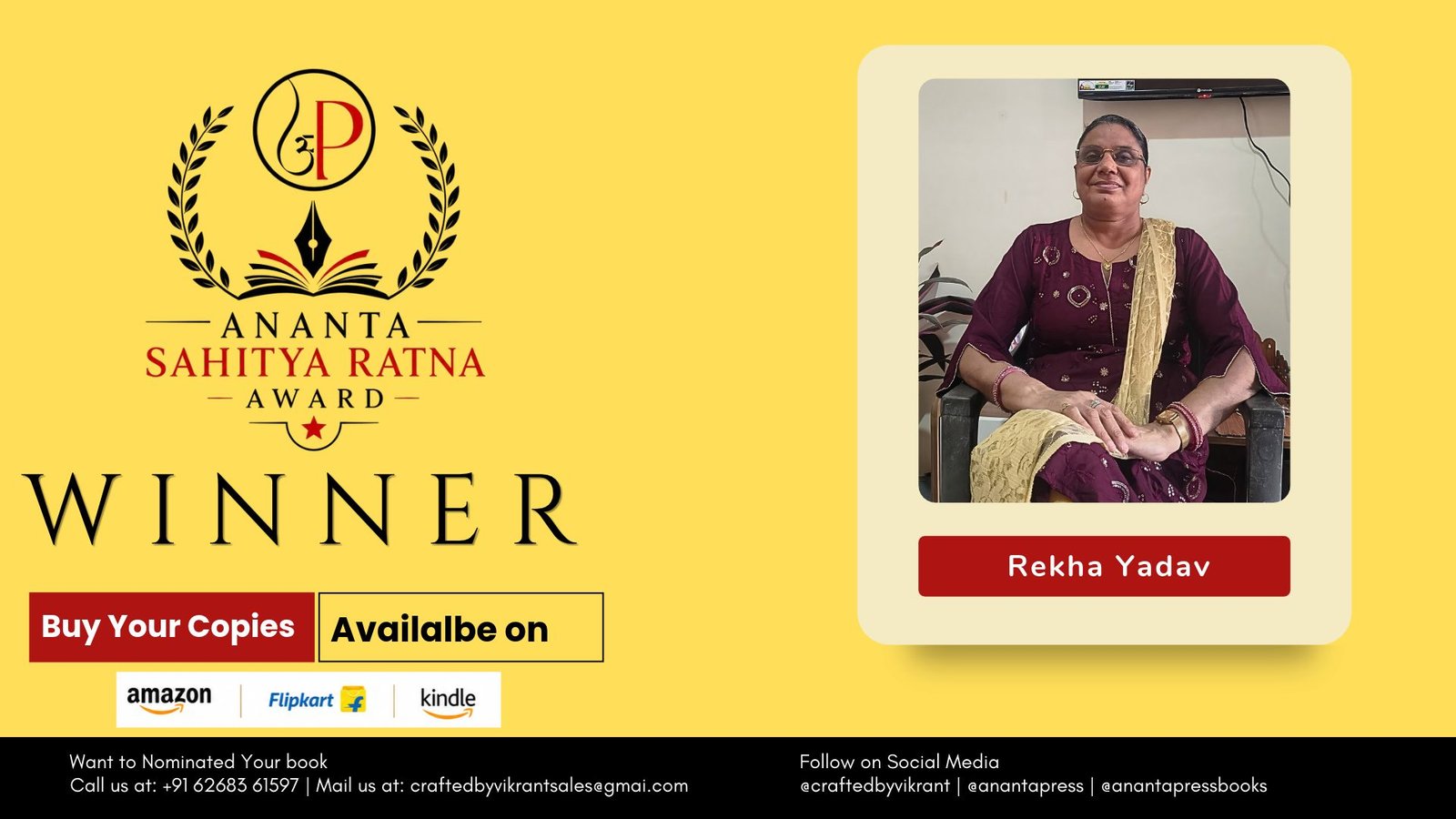
Ananta Press warmly congratulates Rekha Yadav on being recognised as a winner of the Ananta Press Sahitya Ratna Award for her Hindi poetry collection ‘दिपांजली’, subtitled ‘सच्चाई, हिम्मत, हौसले और उजाले की ओर’. This recognition celebrates a book that brings together personal experience, family relationships, social questions and a strong belief in the human ability to find hope during difficult times.
The title points to a simple and meaningful image: a lamp that continues to shine in darkness. That image connects the different poems in this collection. Rekha Yadav does not write only about happy moments. She also writes about disappointment, loss, unfairness and the struggles of ordinary people. Yet, again and again, her poems ask readers to hold on to courage, kindness and self-respect. Her message is not that life is easy. It is that people can face hard days without giving up their values.
In her foreword, the author describes the collection as an offering of the experiences and feelings gathered over her lifetime. This makes the book personal without limiting it to one person’s story. Poems such as ‘समय’, ‘वक्त’, ‘होसला’, ‘आत्मबल’ and ‘आम आदमी’ speak about using time wisely, learning through hardship and finding strength in everyday life. Their direct language gives readers a reason to reflect on their own choices. The ordinary person, rather than a distant hero, stands at the centre of many of these poems.
Another important reason for recognising this book is its concern for society. In ‘दुनिया का चेहरा’, the poet questions selfishness and hypocrisy. In ‘नशा’, she draws attention to the effect of addiction on families. ‘शिक्षा व्यवस्था’ raises concerns about fair educational opportunities, while ‘मेरा देश’ and ‘देश और हम’ connect love for the country with peace, unity and responsibility. These subjects give the collection a purpose beyond personal motivation. They encourage readers to think about how their actions affect other people.
The book is equally attentive to women’s lives and choices. Poems including ‘नारी’, ‘साहसी नारी’, ‘नारी शक्ति’ and ‘भारत की बेटी’ speak of education, confidence, dignity and the freedom to grow. The author presents women not only through their family roles but also through their talents, ambitions and ability to contribute to society. In ‘मेरी बिटिया’, the relationship between a mother and daughter becomes a gentle reminder that care can flow in both directions. These poems add warmth and a clear sense of respect to the collection.
Some of the most moving pages deal with love, memory and absence. ‘तुम कहाँ चले गए’, ‘तुम होते तो’ and ‘तुम नहीं हो फिर भी’ give voice to the pain of missing someone dear. ‘घर’, ‘पिता’ and ‘माँ’ return to the quiet importance of family bonds. The presence of sorrow alongside encouragement makes the book feel more complete. It recognises that strength is not the absence of sadness. Sometimes it is the decision to carry love and memory forward.
The literary value of ‘दिपांजली’ lies in its sincere voice, broad range of subjects and accessible Hindi. Its poems prefer clear expression to difficult language. Some are reflective, some are personal and some make strong social appeals. Together, they invite people of different ages and backgrounds into the conversation. The originality of the collection is found less in complex literary experiments and more in the author’s ability to bring moral questions and familiar emotions together through a consistent image of light.
The Ananta Press Sahitya Ratna Award recognises writing that makes a meaningful contribution to readers and the wider literary community. Rekha Yadav’s collection speaks to that purpose through its concern for truth, courage, social awareness and human relationships. It offers encouragement without ignoring real problems and calls for better conduct without losing compassion.
We congratulate Rekha Yadav on this honour and wish her continued success in her literary journey. May ‘दिपांजली’ reach many readers, inspire thoughtful conversations and remind people that even a small light can help them find their way.
Glenville Ashby
What stands out to me in ‘दिपांजली’ is its steady faith in ordinary people. The poems do not depend on grand events to make their point. They speak about things that almost everyone understands: time passing, hard work, disappointment, hope and the need to keep going. I particularly appreciate the connection between ‘समय’, ‘होसला’ and ‘आम आदमी’. These poems suggest that courage is not always a dramatic act. Sometimes it means doing the right thing again after a difficult day. The idea of light running through the collection gives the many subjects a common centre. I also value the author’s willingness to recognise pain instead of pretending that positive thinking can solve everything. The language is direct and easy to follow, which should help younger readers as well as those who rarely read poetry. For me, the collection’s strength is its honest wish to encourage people while keeping them connected to responsibility and kindness.
Kavya Pandey
I find the poems about women among the most meaningful parts of ‘दिपांजली’. In ‘नारी’, ‘साहसी नारी’ and ‘नारी शक्ति’, Rekha Yadav asks readers to see a woman’s abilities beyond the duties she performs at home. She writes about education, self-respect, hard work and the freedom to make choices. These subjects matter because many women are still expected to put their own dreams last. I especially like the gentler feeling of ‘मेरी बिटिया’. It shows a grown daughter caring for her mother and encouraging her to keep her interests alive. That small change in roles says a great deal about love and respect. The collection does not treat strength as the opposite of affection. It allows a woman to be caring and independent at the same time. The words are simple, but the questions are important. I believe these poems can start useful conversations within families about equality, opportunity and listening to women.
Apeksha Gupta
The social poems in ‘दिपांजली’ left me with questions that continue beyond the page. ‘दुनिया का चेहरा’ looks at selfish behaviour and the gap between how people present themselves and how they treat others. ‘नशा’ turns attention to the suffering that addiction can bring into a household, especially for children and family members. I also found ‘शिक्षा व्यवस्था’ important because it speaks about fair opportunities and the responsibilities of educational institutions. These are not distant subjects. They affect people in daily life. The poems often make their messages directly, and some readers may prefer more subtle writing. However, I feel this clear approach also has value. It makes the ideas easy to discuss in classrooms, homes and reading groups. The author is willing to ask uncomfortable questions and to remind readers that society improves through personal conduct as well as public action. That sense of concern gives the collection a strong purpose.
Kavita Kaushik
The poems about family and remembrance affected me most while considering ‘दिपांजली’. ‘तुम कहाँ चले गए’, ‘तुम होते तो’ and ‘तुम नहीं हो फिर भी’ speak about what remains after a loved person is gone. They do not try to make grief disappear. Instead, they show how memories continue to live in ordinary moments. This is a gentle and believable way of writing about loss. I also liked ‘घर’, which reminds us that a home is made by care and belonging, not only by walls and rooms. The poems about parents and children widen this feeling of connection. At times, the expressions are very plain, but I see that as part of the author’s choice to speak openly from the heart. The book moves between sadness and encouragement without suggesting that one cancels the other. I think readers dealing with change, distance or loss may find comfort in that balance and in the familiar emotions the poems describe.
Neel Preet
One of the strongest aspects of ‘दिपांजली’ is the way it links hope with duty towards other people. In poems such as ‘मेरा देश’, ‘देश और हम’, ‘हमारे जवान’ and ‘युवावर्ग’, the author speaks about the country through questions of unity, effort, service and responsibility. I appreciate that love for a nation is not presented only as a slogan. There is concern about division, unfairness and the choices made by citizens. The poems encourage young people to gain knowledge and take their role in society seriously. I also see a connection between these public themes and the personal poems about courage. A better society begins when individuals develop patience, honesty and concern for others. This may sound simple, but it is a useful reminder in a time when public discussion can become harsh. Rekha Yadav’s writing is clear in its values and direct in its appeal. It invites readers to turn good intentions into everyday actions.
Deepak Seth
I would describe ‘दिपांजली’ as a collection that wants to be understood rather than admired from a distance. Rekha Yadav writes in a straightforward Hindi style, often using repeated thoughts and direct questions to make her point. This gives many poems a spoken quality. They can be read aloud and discussed by people who may not be familiar with formal poetry. I noticed how the book moves from personal struggle in ‘आत्मबल’ to family affection in ‘मेरी बिटिया’, and then to social concern in ‘नशा’ and ‘शिक्षा व्यवस्था’. That range helps explain the meaning of its central image of light. Not every poem aims for delicate imagery or hidden meanings, and a few messages are repeated. Still, the sincerity of the voice remains clear. I respect the effort to bring literature closer to ordinary experience. The collection may appeal especially to readers who want poetry that offers reflection, encouragement and a reason to care about the world around them.