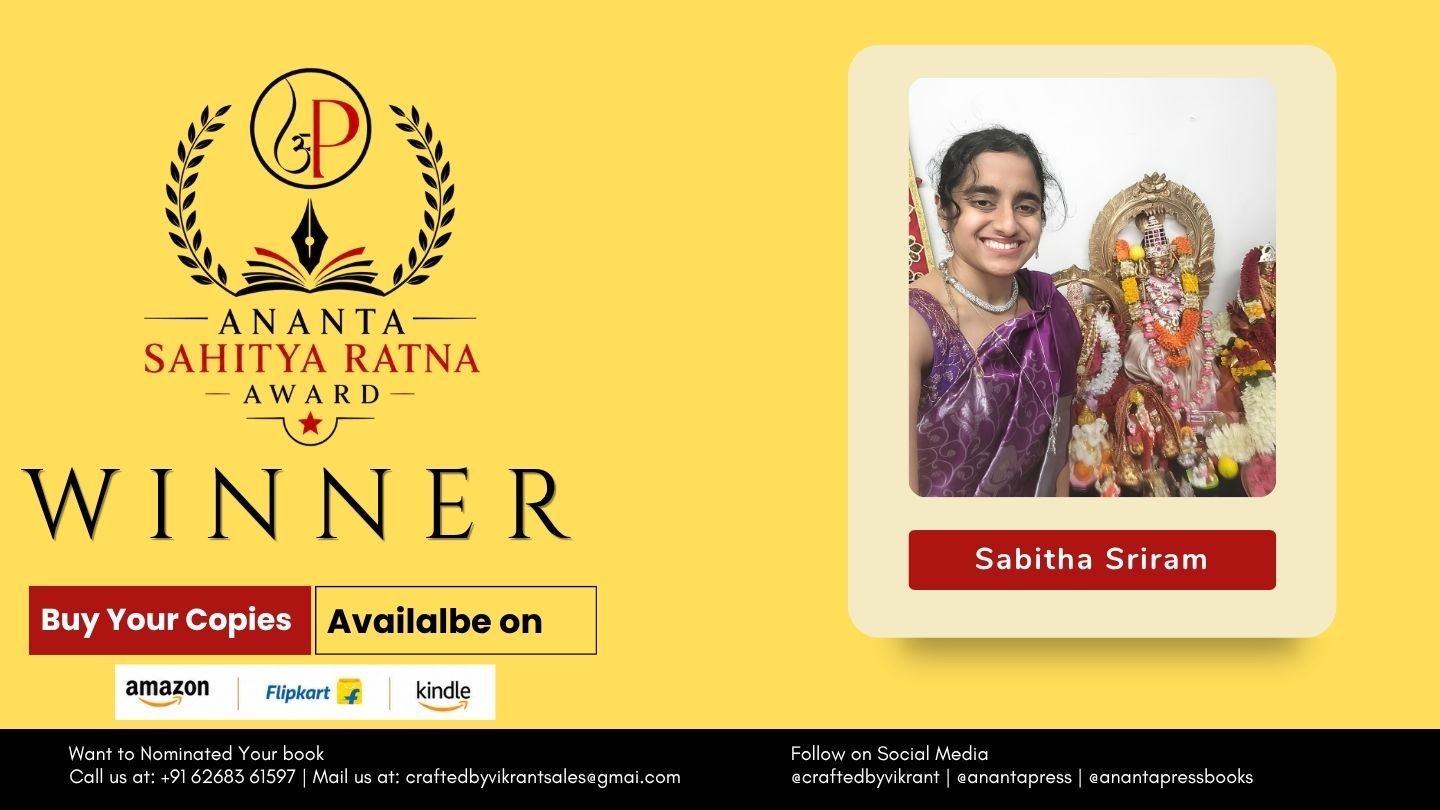
The Ananta Press Sahitya Ratna Award proudly congratulates Sabitha Sriram, author of the academic work Humanity Magic Wand, on being selected as a winner of this distinguished recognition. Her work explores one of the most important questions of our time: how can artificial intelligence be developed and used in ways that serve humanity, protect human values, and support a fairer society? Through its focus on ethical, compassionate, and human-centered AI, the book brings attention to the responsibility that comes with technological progress.
Humanity Magic Wand offers a thoughtful perspective on the relationship between artificial intelligence and human welfare. As AI becomes increasingly integrated into businesses, institutions, and everyday life, its influence extends far beyond convenience and efficiency. It raises important questions about fairness, accountability, safety, and the potential consequences of relying on automated systems. Sabitha Sriram addresses these concerns by emphasizing that technology should be guided by ethical principles and a genuine commitment to the well-being of people.
One of the most significant aspects of the book is its recognition that artificial intelligence can bring meaningful benefits when it is used responsibly. AI has the potential to support humanitarian initiatives, improve decision-making, and help organizations address complex challenges. However, these possibilities must be balanced against risks such as hallucinations, biased outputs, and the harmful consequences that can arise when systems are implemented without proper oversight. By drawing attention to both the opportunities and the dangers, the book encourages readers to approach technological innovation with awareness, responsibility, and compassion.
The book’s central message is particularly relevant in a world where organizations are rapidly adopting AI solutions. Sabitha Sriram highlights the importance of appropriate regulation, effective risk management, and ethical governance. Rather than treating AI as a tool for technological dominance alone, she encourages a broader vision in which human needs remain central to innovation. Her emphasis on integrating ethical AI into business strategy provides an important perspective for decision-makers, researchers, professionals, and readers interested in the future of technology.
Another important contribution of Humanity Magic Wand is its focus on inclusive and equitable growth. The book raises the question of whether technological advancement should primarily benefit powerful technology companies or contribute to the welfare of society as a whole. By placing humanity before corporate dominance, the work advocates a more balanced approach to progress, one that recognizes the importance of social responsibility, equal opportunity, and collective well-being. This perspective gives the book relevance beyond academic discussions and invites readers to consider the broader social consequences of the decisions made by technology developers, businesses, and policymakers.
The Ananta Press Sahitya Ratna Award celebrates works that demonstrate meaningful thought, originality, and the ability to contribute to knowledge and society. It recognizes authors whose efforts encourage readers to reflect on important subjects and appreciate the value of informed, responsible thinking. In the academic category, the award acknowledges the importance of research-driven perspectives that address contemporary challenges and offer insights that can benefit both individuals and communities.
The selection of Humanity Magic Wand by the award committee reflects the importance of its subject, its focus on ethical responsibility, and its commitment to placing human welfare at the center of technological development. The work brings together questions of innovation, governance, business strategy, and social impact in a way that encourages a more thoughtful understanding of artificial intelligence. Its emphasis on preventing avoidable harm while maximizing the positive potential of AI makes it a timely contribution to discussions about the future of society.
The book also stands out for the questions it encourages readers to ask. What safeguards are necessary to ensure that AI systems remain trustworthy? How can organizations balance innovation with accountability? What responsibilities do developers and decision-makers have toward the people affected by their technologies? These questions demonstrate the practical and intellectual value of the subject. By encouraging readers to think critically about these issues, the book supports a more informed and responsible approach to technological progress.
The award committee’s recognition of Sabitha Sriram celebrates the significance of addressing such complex issues through academic work. Her book offers a perspective that is both forward-looking and grounded in the enduring importance of human values. Its message reminds readers that technological advancement should not be measured only by speed, scale, or commercial success, but also by its ability to protect people, reduce harm, and create opportunities for a better future.
This achievement marks an important milestone in Sabitha Sriram’s contribution to academic writing and the discussion of ethical artificial intelligence. By bringing attention to the relationship between technology and humanity, she contributes to a conversation that will continue to shape businesses, institutions, and communities in the years ahead.
Ananta Press extends its heartfelt congratulations to Sabitha Sriram on winning the Ananta Press Sahitya Ratna Award for Humanity Magic Wand. May this recognition encourage her to continue exploring important ideas, contributing to academic discourse, and inspiring readers to view innovation through the lens of responsibility and compassion. Her work serves as a reminder that the true value of technology lies not simply in what it can achieve, but in how wisely and humanely it is used. Ananta Press wishes her continued success and many more opportunities to make a meaningful contribution to knowledge, literature, and society.
Proposed Jury Feedback
Glenville Ashby
Humanity Magic Wand deserves attention because it begins with a question that technology discussions too often overlook: who benefits when powerful systems are introduced into everyday life? Sabitha Sriram presents artificial intelligence not as a miracle that should be accepted without question, but as a tool that requires careful human judgment. I appreciate the emphasis on responsible governance and the need to understand risks before organizations depend on AI outputs. The discussion of hallucinations and bias is important because these failures can affect decisions, reputations, and public trust. The book’s central strength is its balanced message. It recognizes the practical promise of AI while asking readers to consider consequences for people. This is a valuable contribution to academic conversations about technology because it makes responsibility part of progress rather than an afterthought. Readers interested in thoughtful technology leadership will find questions here and good reasons to examine their own assumptions.
Kavya Pandey
What makes Humanity Magic Wand memorable is its insistence that compassion must remain visible in conversations about artificial intelligence. New technologies are discussed through speed, productivity, and competition. Sabitha Sriram directs attention toward the people whose lives may be shaped by automated decisions. That change of focus gives the book a purpose beyond describing technology. It asks whether innovation can support fairness, inclusion, and shared opportunity. I value this approach because a system cannot be called successful if its benefits are available only to powerful organizations while vulnerable communities carry the risks. The book raises an important responsibility for its readers. We should not admire tools without considering who may be overlooked or harmed by them. Its message has relevance for students, educators, decision makers, and anyone concerned about social welfare. The human perspective makes this academic subject meaningful and encourages a more caring way of thinking about our future.
Apeksha Gupta
The value of Humanity Magic Wand lies in the connection it draws between ethical principles and decisions that organizations must make in practice. Sabitha Sriram considers AI not simply as a collection of technical capabilities, but as something that needs governance, risk management, and a clear place within business strategy. That perspective is useful for readers trying to understand why responsible adoption matters. An organization may gain efficiency from an AI system, yet still create serious problems if its results are misleading or unfair. The book encourages readers to think about such tensions before treating deployment as success. I also appreciate the academic focus on questions that cross professional boundaries. Policy, technology, management, and public interest all have roles in the conversation. By bringing these concerns together, the work offers a meaningful starting point for reflection and discussion. Its relevance extends beyond specialists to those shaping institutions and public trust.
Kavita Kaushik
Humanity Magic Wand has a title that suggests possibility, but its message remains grounded in responsibility. That contrast gives the work a distinctive identity. Sabitha Sriram invites readers to imagine the good artificial intelligence might achieve while also recognizing that hopeful language alone cannot remove dangers. I appreciate the clarity of this central idea. Progress should not be measured only through sophisticated products or the influence of large technology companies. It should also be measured through the dignity, safety, and well-being of the people affected. The book’s significance comes from making those human concerns central to an academic discussion. It is encouraging to see a subject treated as distant or highly technical connected with familiar values such as fairness and compassion. Readers may approach the book with different levels of knowledge about AI, but its underlying questions are widely relevant. Such writing can encourage both learning and responsible public conversation.
Neel Preet
One of the strongest themes in Humanity Magic Wand is the warning that artificial intelligence can produce harmful outcomes when people trust it without enough care. Sabitha Sriram identifies hallucinations and biased outputs as problems that deserve attention, not minor inconveniences to be ignored. This is important because the confidence of a machine can make incorrect information seem reliable. The book encourages readers to understand the difference between technological capability and trustworthy performance. I find that distinction valuable for people using AI in education, business, research, and decisions. Important is the argument that regulation and ethical oversight can help protect users while allowing beneficial applications to develop. The work does not ask readers to reject innovation. It asks them to place accountability alongside ambition. That makes its message constructive and timely. It encourages a culture in which questioning an automated answer is a sign of responsibility, not resistance to progress.
Deepak Seth
Humanity Magic Wand makes a contribution by asking what kind of future we are choosing as artificial intelligence becomes part of institutions and communities. Sabitha Sriram argues that humanity should take precedence over the unchecked dominance of technology companies. This principle gives the book a moral direction. Innovation has value when it supports inclusive growth and improves social welfare instead of simply increasing influence or profit. I appreciate that the book links this concern with ideas such as governance, risk management, and responsible business integration. These topics belong together because good intentions need structures that can protect people. The work encourages readers to think beyond individual products and consider the rules, priorities, and decisions that shape technological development. Its message is relevant to academic discussion as well as policy and leadership. Most importantly, it reminds us that technology should remain a means of serving people, never an end in itself.
Congratulations and Best Wishes
Ananta Press celebrates Sabitha Sriram’s contribution to responsible academic writing and wishes her continued success in advancing conversations about ethical, compassionate, and human-centered AI.